
 0
0
 0
0
By Denise Kyalwahi
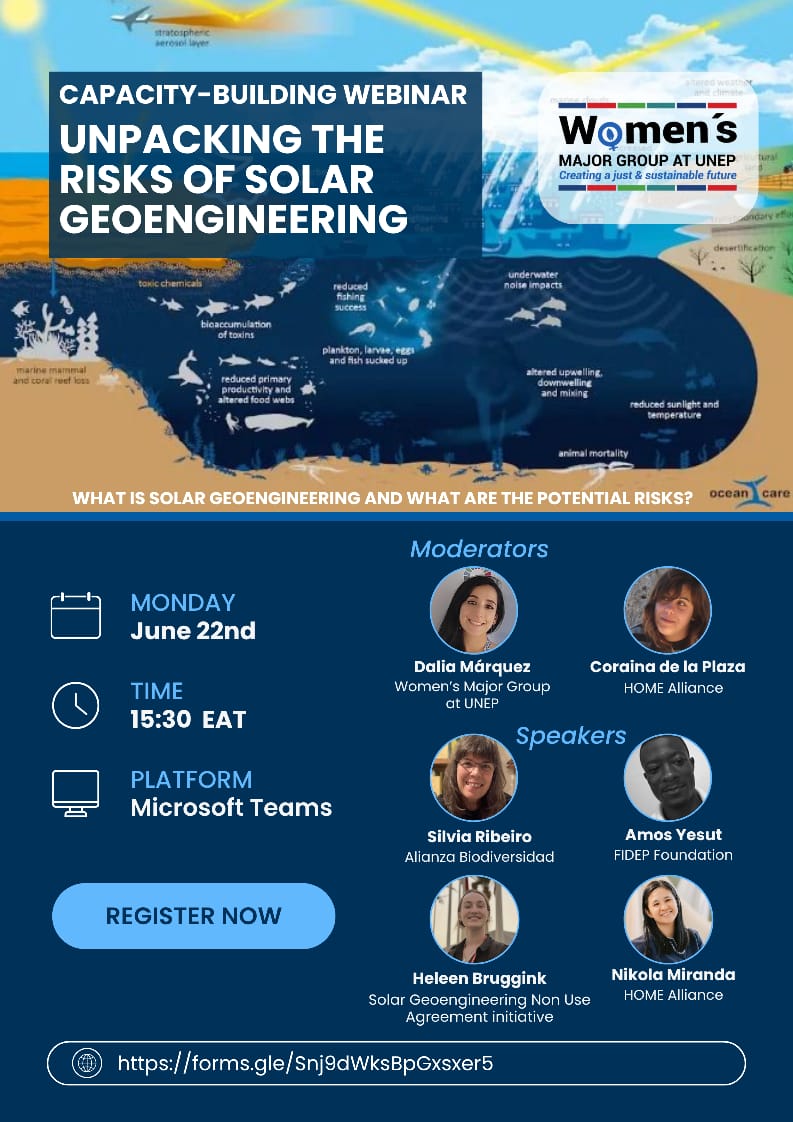
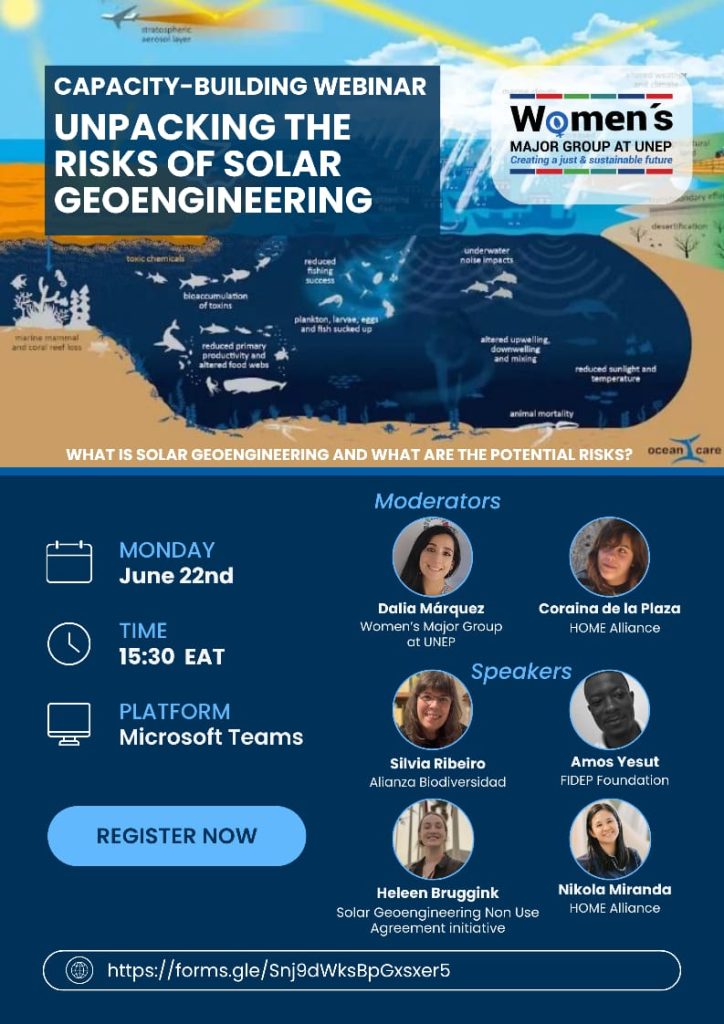
During an international webinar dedicated to solar geoengineering, women environmental activists gathered within the Women’s Major Group (WMG) of the United Nations Environment Programme (UNEP) expressed their opposition to the use of this technology, which they consider a threat to the global climate balance.
During the virtual meeting, participants advocated for the adoption of an international agreement banning the use of solar geoengineering and launched a petition open to people around the world aimed at stopping the normalization of this practice.
The discussions also helped develop a roadmap ahead of COP31, with the objective of strengthening international advocacy against artificial climate modification technologies.
A Technology Considered Risky and Speculative
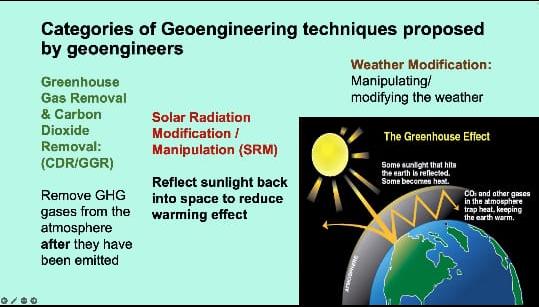
In recent years, calls for research into solar geoengineering — also known as solar radiation management — have multiplied. This technology includes a range of speculative methods aimed at reducing the amount of solar radiation reaching the Earth in order to limit global warming.
However, according to WMG/UNEP members, these initiatives represent a dangerous technological escape forward. They believe that deploying such technologies on a planetary scale cannot be fairly, inclusively, and effectively governed by current international institutions.
“The global deployment of solar geoengineering poses unacceptable risks to the environment, agriculture, water resources, and geopolitical stability,” several speakers emphasized.
An Open Letter to Stop Normalization
Participants recalled that in January 2022, the NGO Solar Geoengineering Non-Use Agreement sent an open letter to world leaders calling for an international agreement on the non-use of solar geoengineering.
This initiative, led by academics, advocates for an international non-use agreement on solar geoengineering.
In the declaration, signatories call on governments, the United Nations, and international stakeholders to prevent the normalization of this technology within global climate policies.
According to the initiative, three major concerns justify this demand:
- Environmental and climate risks remain largely unknown and could vary from one region to another;
- Solar geoengineering could slow down decarbonization efforts by giving governments and polluting industries an excuse to delay ambitious climate action;
- The current international system lacks the democratic mechanisms and institutions capable of regulating these technologies fairly on a global scale.

The authors of the letter also believe that unilateral deployment by the most powerful countries could worsen climate injustices and trigger major geopolitical tensions.
Five Proposed Measures
The proposed international agreement is based on five key commitments:
- Prohibit public funding for the development of solar geoengineering technologies;
- Ban outdoor experiments involving these technologies;
- Reject patents related to solar geoengineering;
- Refrain from deploying these technologies, even if developed by third parties;
- Oppose their inclusion as official tools within international climate policies.
Supporters of the agreement specify, however, that it would not seek to ban scientific research on climate or the atmosphere, but rather to prevent the development and deployment of technologies considered dangerous and insufficiently controlled.

A Call for Sustainable Climate Solutions
For the webinar participants, the fight against climate change must primarily focus on reducing greenhouse gas emissions, accelerating the energy transition, and decarbonizing economies rather than relying on risky technological solutions.
“Solar geoengineering is neither desirable, ethical, nor politically governable in the current context,” they concluded.
Faced with the growing normalization of this research, women environmental activists within the Women’s Major Group (WMG) of the United Nations Environment Programme (UNEP) are now calling for a strong political response from governments and the United Nations to prevent the global development of these technologies.
You can sign the open letter here:


